
Last Updated: November 5, 2026
Quick Summary
Print fading on shirts is prevented by washing them inside out in cold water on a gentle cycle, using a mild detergent without bleach, and air drying them away from direct sunlight. Heat, friction, and harsh chemicals break down the ink, so limiting all three slows print fading with every wash.
- Turn shirts inside out before washing to reduce rubbing against the drum and other clothes.
- Wash in cold water, ideally 30°C or below, on a gentle or delicate cycle.
- Use a mild detergent with no bleach or optical brighteners, and skip fabric softener.
- Air dry shirts or use the lowest dryer heat, removing them while still slightly damp.
- Iron screen printed shirts inside out on low heat with no steam, never directly over the ink.
Table of Contents
- Why Shirt Prints Fade in the First Place
- How to Wash Printed Shirts Without Fading the Design
- How to Wash Screen Printed Shirts and Keep Print From Cracking
- Drying and Storing Shirts to Preserve Prints
- Frequently Asked Questions
Why Shirt Prints Fade in the First Place
Most print fading comes down to heat, friction, and harsh chemicals, each breaking down the ink or its bond with the fabric with every wash, which is why print fading tends to show up gradually over months of laundering.
- Heat from hot water and high-heat dryers weakens the ink film
- Friction from tumbling against zippers, buttons, and other clothes wears the surface down
- Harsh chemicals like bleach and strong detergents strip color
How to Wash Printed Shirts Without Fading the Design
Turn the shirt inside out before washing to shield the print from rubbing against the drum and other clothes.
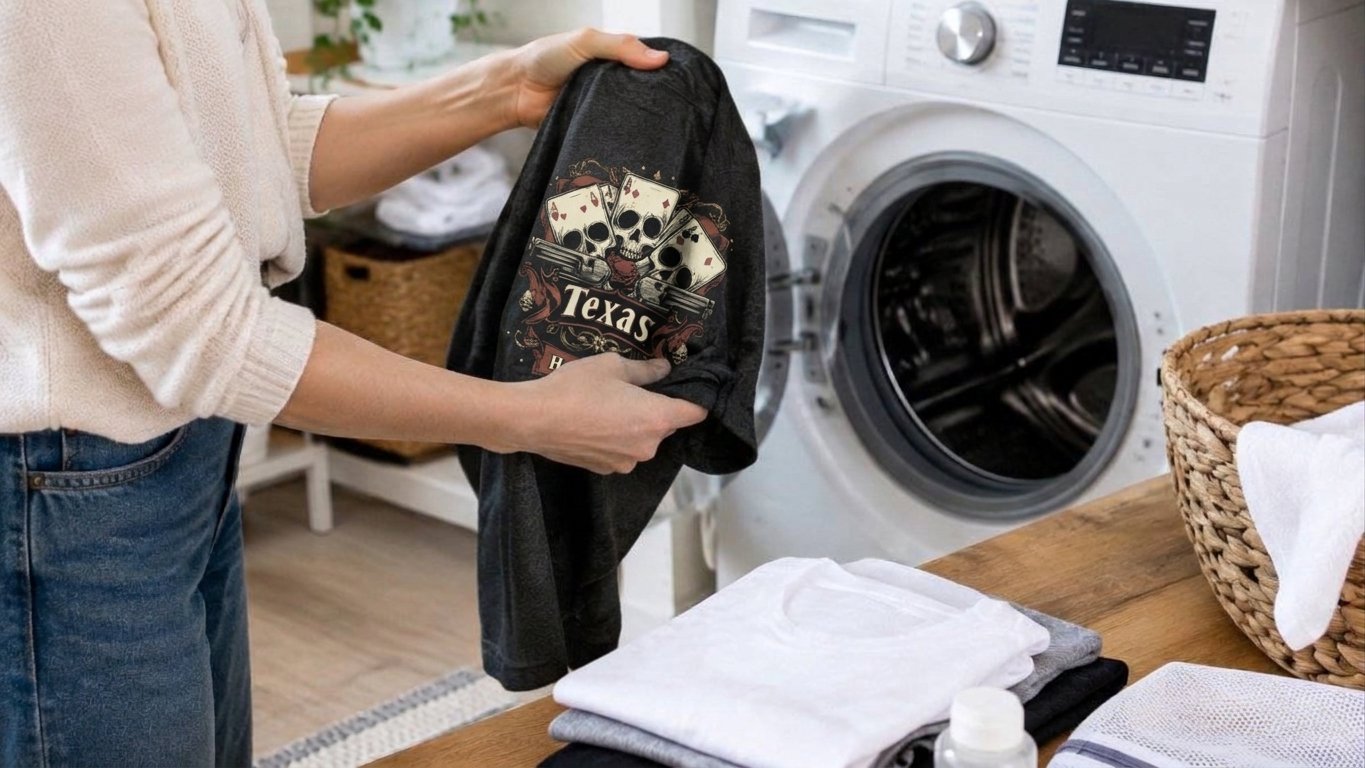
Hands turning a graphic t-shirt inside out before washing in a front-loader machine
- Wash in cold water, ideally 30°C or below
- Choose a gentle or delicate cycle
- Use a mild detergent with no bleach or optical brighteners
- Wash similar colors together and avoid overloading
Skip the fabric softener too. It can coat the print and leave it looking dull over time.
How to Wash Screen Printed Shirts and Keep Print From Cracking
Screen printed ink is a cured plastisol or water-based layer sitting on top of the fabric. That raised film fails first: heat makes the ink brittle, and abrasion makes brittle ink crack along the design's edges.
Wash settings that protect screen printed ink
- Turn the shirt inside out so the print faces the drum wall, not other garments
- Use cold water, 30°C or below, on a gentle cycle with a low spin speed
- Use a mild liquid detergent and skip bleach, oxygen boosters, and optical brighteners
- Wash with soft items, not jeans, towels, or anything with zippers and buttons
- Skip fabric softener and dryer sheets, which leave a residue that dulls the ink film
Drying and ironing screen printed shirts
Air drying is safest. If you use a dryer, choose the lowest heat and pull the shirt out while still slightly damp. One hot dryer cycle does more visible damage to a screen print than a dozen cold washes.
To press a screen printed shirt, turn it inside out and iron the back of the design on low heat with no steam. Never iron directly over the ink.
Watch out: stretching a cracked screen print while it is warm, such as pulling the shirt over your head straight from the dryer, widens existing cracks and can lift the ink at the edges.
How this differs from other print types
Care should follow the print, not just the fabric. Heat-transfer and direct-to-garment prints are more sensitive to heat and ironing than screen prints, while sublimation dyes are bonded into polyester fibers and generally the most wash-tolerant. When in doubt, cold wash, inside out, and air dry is safe across every print type.
Drying and Storing Shirts to Preserve Prints
Drying is where most print damage happens, because heat and tumbling combine. Air drying avoids both. Hang the shirt inside out on a padded hanger, or lay it flat on a clean towel, away from direct sunlight, which fades both the print and the fabric dye.
Concrete dryer settings if you must tumble dry
- Choose the lowest heat setting, or a no-heat air-fluff cycle if available
- Remove the shirt while still slightly damp and hang it to finish
- Dry printed shirts separately from towels and denim, which shed lint and create friction
- Clean the lint trap before each load; a clogged trap extends dry time and exposes prints to more heat
Storing printed shirts
Fold shirts rather than hanging them for long periods, since hangers stretch the neckline and shoulders. Keep folded shirts in a dry drawer away from direct sun, avoid stacking heavy items on a printed design, and never store shirts in a hot car, attic, or damp basement, heat and moisture both degrade the ink film.
If a print has already started to fade or crack
Prevention is the main lever, but a shirt already showing wear is not necessarily finished. A few cautious steps can slow further damage:
- Wash less often and spot-clean small marks instead of running a full cycle
- Switch immediately to cold water, inside out, and air drying to stop the decline
- For a print that is cracking but not peeling, a low-heat press from the inside with a pressing cloth can sometimes re-bond the ink film; test on an inconspicuous area first
- For a print peeling at the edges, avoid pulling or picking at it, since that lifts more ink
Watch out: once ink has visibly faded in color or lifted from the fabric, that damage is generally irreversible at home. The realistic goal is to stop it getting worse, not to restore the original brightness.
Step |
Best Practice |
Why It Helps |
|---|---|---|
Washing |
Inside out, cold, gentle cycle |
Limits friction and heat |
Detergent |
Mild, no bleach or softener |
Protects ink color and film |
Drying |
Air dry, or lowest heat and remove damp |
Prevents cracking and fading |
Storage |
Fold, dry drawer, out of sun |
Stops fading and stretching |
Following these habits gives your prints the best chance of looking fresh wash after wash: inside out, cold, and air dry.
Frequently Asked Questions
How do you stop shirt designs from fading?
Turn the shirt inside out before every wash, use cold water, pick a gentle cycle and a mild detergent, and avoid bleach. These steps reduce friction and heat, the two main causes of fading. Hang the shirt or lay it flat to dry rather than using a hot dryer. Doing this consistently from the first wash makes a visible difference over months of wear, because each wash cycle removes a little ink when the print is exposed to abrasion and harsh chemicals.
Should you wash printed shirts inside out?
Yes. Washing printed shirts inside out keeps the design from rubbing against the drum, other clothes and the zipper or buttons. Friction is one of the main causes of cracking and peeling on screen printed and heat transferred graphics. Inside-out washing costs nothing extra and works for every print method, so it is the simplest habit to adopt before any other step in your laundry routine.
What water temperature is best for washing printed shirts?
Cold water is the safest choice for printed shirts. Hot water softens ink binders and speeds up fading, while cold water keeps the colors and print layer intact. Use a cold rinse and a gentle or delicate cycle. If a stain needs more power, spot-treat it with a mild detergent before washing instead of raising the water temperature for the whole load.
