
Last Updated: November 12, 2026
Quick Summary
A custom printed t-shirt is worth it when its cost per wear is at or below the alternative you would otherwise buy and the shirt still looks good after many washes. The math depends on how often you will wear it, the fabric weight and cotton content, and the print method. Our classic tees run 5.0 to 5.3 oz/yd² and are priced from $22.00 to $29.00.
- Calculate cost per wear by dividing the purchase price by the number of times you expect to wear the shirt.
- Classic tees run 5.0 to 5.3 oz/yd² and most colors are 100% cotton.
- Turn the tee inside out, wash in cold water on a gentle cycle, and skip fabric softener and bleach.
- Hang to dry or tumble dry on low, since hot dryers are the fastest way to crack a graphic.
- Start with a single shirt to test fit and fabric before ordering more, since all sales are final for sizing.
Table of Contents
- What a Custom Printed T-Shirt Actually Costs You
- What Separates a Good Custom Tee From a Disposable One
- Screen Printing vs Direct-to-Film Printing: Which Lasts Longer
- How Long Custom Prints Hold Up and How to Wash Them
- Where ZUZUV's Current Tees Fit Your Needs
- Who a Custom Printed T-Shirt Is Worth It For (and Who Should Skip It)
- Deciding on Your First Custom Tee Order
- Frequently Asked Questions
What a Custom Printed T-Shirt Actually Costs You
Whether a custom printed t-shirt is worth it depends on what you need it to do, how often you will wear it, and how much you care about the fabric underneath the print. At ZUZUV, pieces are made on demand after you order.
Our current tees are priced at $22.00 for the Charlie don't surf unisex classic tee, $23.00 for the Men's classic tee in the Rooster Totem series, $25.00 for the VELOCE 55 Euro Roadster racing classic tee and the GOLDEN EYE unisex classic tee, and $29.00 for the Phantom Grid racing unisex classic tee. Free US shipping applies to the Phantom Grid tee.
The real question is cost per wear. A $25 tee you wear once a month for two years costs far less per wear than a $12 tee you replace after a season of fading. Keep that math in mind as you read the rest of this review.
Current ZUZUV tee prices (USD)
What Separates a Good Custom Tee From a Disposable One
Most cheap graphic tees look fine on the hanger and fall apart after a few washes. The difference usually comes down to three things: fabric weight, fiber content, and construction. You can check all three on a product listing before you buy.
Fabric weight and cotton content
Fabric weight tells you how thick and sturdy a shirt feels. Our classic tees run 5.0 to 5.3 oz/yd² (170 to 180 g/m²). For a heavier construction, see the Camaro Ss Garment Dyed Heavyweight Long Sleeve Shirt to compare solid fabric build. The base is 100% cotton on most colors. Sport Grey is 90% cotton and 10% polyester, Ash Grey is 99% cotton and 1% polyester, and Heather colors are 50% cotton and 50% polyester.
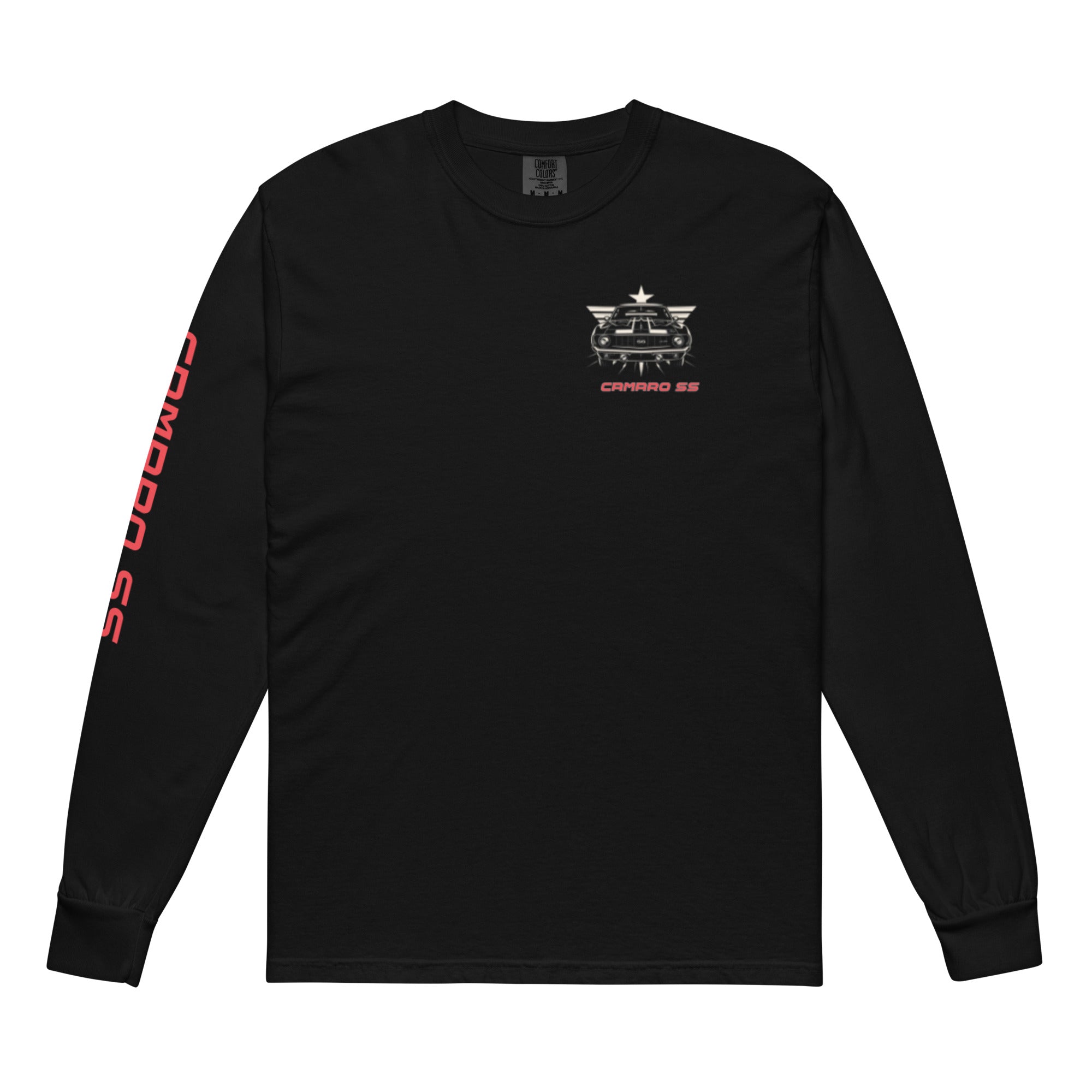
Blends are not automatically worse. Heather colors are a 50% cotton, 50% polyester blend. If you want the most natural feel, stick with the solid 100% cotton colors.
Stitching, taped seams and hem construction
Construction determines whether a shirt stretches out of shape or keeps its outline. Our classic tees use taped neck and shoulders. They also use double seams at the sleeves and bottom hem.
The classic tees use tubular fabric construction and open-end yarn. Check these features in the listing before you commit.
Screen Printing vs Direct-to-Film Printing: Which Lasts Longer
The print method affects how the graphic looks on day one and how it holds up over time, but the durability difference between screen printing and direct-to-film (DTF) printing comes down to specific mechanisms you can evaluate before you buy.
Screen printing pushes ink through a mesh stencil, one color at a time, and cures the ink into the fabric. Because the ink sits in and on the weave rather than as a separate film, a well-cured screen print typically flexes with the shirt and resists cracking at the seams and stress points. The trade-off is setup: each color needs its own screen, so screen printing rewards bold, solid designs with a limited palette and becomes less economical as color count and detail increase.
Direct-to-film printing prints a full-color image onto a film, applies a powder adhesive, and heat-presses the film onto the garment. This handles gradients, fine lines, and photographic artwork that screen printing struggles with. The durability question for DTF is the bond between the film and the fabric: a properly pressed transfer adheres through the weave and survives repeated washing, while an under-pressed or over-stretched transfer can lift at the edges or feel like a plastic patch.
Neither method is automatically more durable. Longevity depends on ink quality, curing temperature and time, fabric fiber content, and how the print is applied. A common pattern is that screen prints fail by cracking across large solid areas, while DTF prints fail by edge lift or a stiff hand-feel that worsens with heat. When you evaluate a custom tee, ask which method is used, look at photos of the print up close, and check whether the producer describes curing or press settings.
A practical way to judge worth is to compare the print method against your design. If your artwork is a bold logo with two or three colors, screen printing is usually the more durable and cost-effective route. If your artwork is detailed, photographic, or gradient-heavy, DTF is the method that preserves the design, and durability then depends on the producer's press quality. For either method, the care routine in the next section matters as much as the print itself.
How Long Custom Prints Hold Up and How to Wash Them
A print that lasts comes down to care as much as manufacturing. Most fading and cracking we see is caused by the wash routine, not the shirt itself.
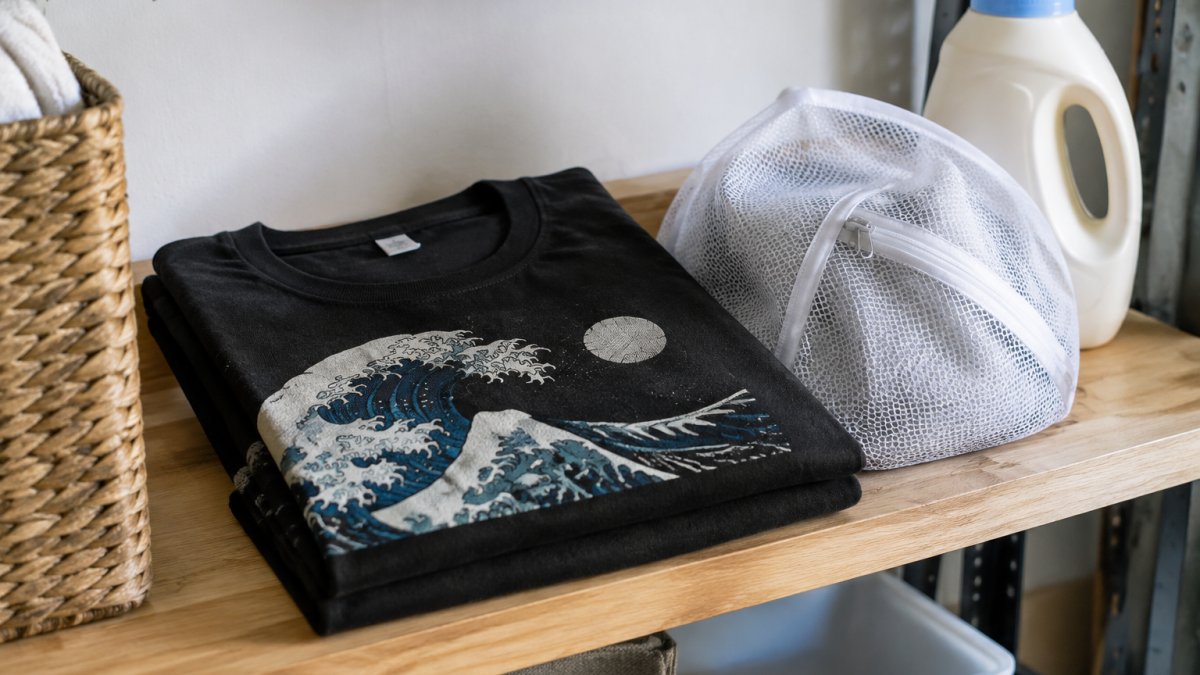
Turn the tee inside out before washing. Use cold water, a gentle or delicate cycle, and a mild detergent. Skip fabric softener, which can coat the fibers and dull the print. Avoid bleach entirely. Hang the shirt to dry or tumble dry on low, and never leave it in a hot dryer, since heat is the fastest way to crack a graphic. Ironing directly over the print causes damage, so iron the inside or place a cloth over the design.
Most fading and cracking comes from the wash routine, so the care steps below matter as much as the print itself.
| Care step | What to do | Why it matters |
|---|---|---|
| Turn inside out | Turn the tee inside out before washing | Protects the print from friction |
| Water temperature | Use cold water | Heat is a main cause of cracking |
| Cycle and detergent | Gentle or delicate cycle with mild detergent | Limits wear on the print |
| Softener and bleach | Skip fabric softener; avoid bleach | Softener dulls the print; bleach damages it |
| Drying | Hang to dry, or tumble dry on low | Hot dryers crack graphics fastest |
| Ironing | Iron the inside or cover the print with a cloth | Direct ironing damages the design |
Where ZUZUV's Current Tees Fit Your Needs
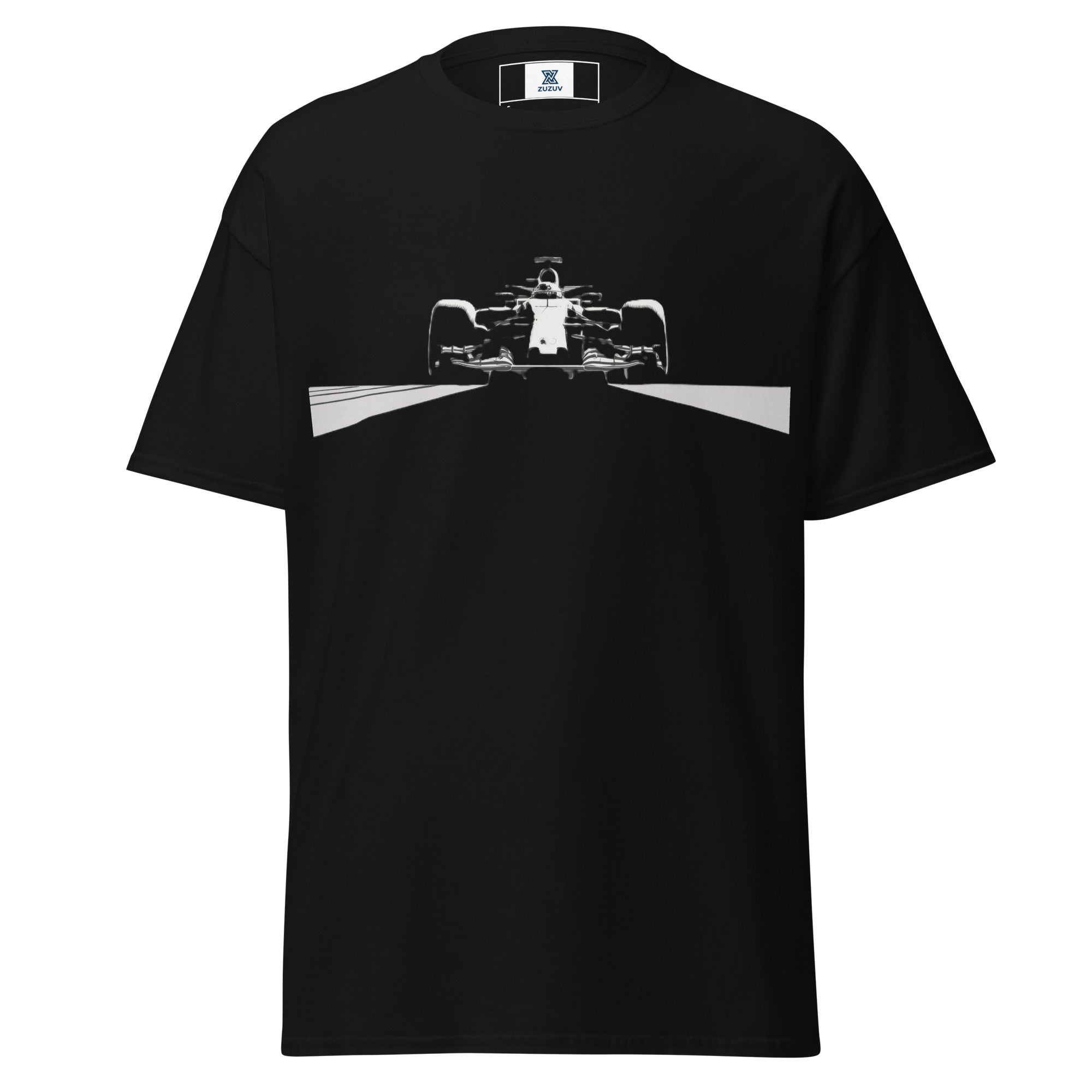
Our current line covers a range of styles. The Phantom Grid racing unisex classic tee, priced at $29.00, suits fans of motorsport and Grand Prix style and comes with free US shipping. The Charlie don't surf unisex classic tee, at $22.00, is our lowest-priced option for a casual everyday shirt. The Men's classic tee in the Rooster Totem series, at $23.00, carries an Aztec art style, while the VELOCE 55 Euro Roadster racing tee and the GOLDEN EYE unisex classic tee are both $25.00.
If you are weighing a first purchase, the Phantom Grid racing unisex classic tee gives a clear sense of the fabric weight and construction we have described, and it is a good reference point before you choose a design.
Who a Custom Printed T-Shirt Is Worth It For (and Who Should Skip It)
Most guides answer this question with a list of buyer types. A more useful approach is a break-even framework: calculate cost per wear, compare it to the alternative you would actually buy, and decide from the number rather than the vibe.
The formula is simple. Cost per wear equals the purchase price divided by the number of times you expect to wear the shirt. A shirt you wear once a month for two years is 24 wears. A shirt you wear weekly for two years is roughly 104 wears. Run your own estimate against the price of the tee you are considering and against the price of the shirt you would buy instead.
The second variable is replacement rate. A cheaper tee that fades, shrinks, or cracks after a season forces a replacement purchase, which resets the cost-per-wear math. A shirt that holds its shape and print through many washes spreads its price across more wears. This is why fabric weight, fiber content, and print method matter to the worth question: they are the inputs that determine how many wears you actually get.
The third variable is use case. A custom printed tee is worth it for people who wear graphic shirts often, want a design that reflects their interests, and value a shirt that holds its shape over many washes.
It is less worth it in three situations. If you need a plain shirt for work, the design adds no value to your rotation. If you plan to buy in bulk for a large event, per-unit economics and delivery timelines matter more than individual garment longevity, and made-on-demand production is the wrong fit. If you need a shirt within a few days, on-demand production takes longer to arrive than a store-bought blank. All sales are final for sizing or buyer's remorse, and returns are accepted only for defective or damaged items, so check the size guide before ordering.
If you cannot name enough occasions to wear the design in the next year, start with a single shirt and test the fit and fabric before committing to more.
Deciding on Your First Custom Tee Order
Start by choosing a design you will still like in a year, then pick the fabric and fit that match how you plan to wear it. If you are unsure of your size, use the size guide on each product page and compare the measurements to a shirt you already own.
Our pick for a first order is the Max Racing unisex classic tee, since it lets you test the fit and fabric before committing to a larger order. Order one shirt, wash it the way described above, and judge it after a few cycles. That single test will tell you more about whether a custom tee is worth it for you than any review can.
Frequently Asked Questions
What is the average price for a custom printed t-shirt?
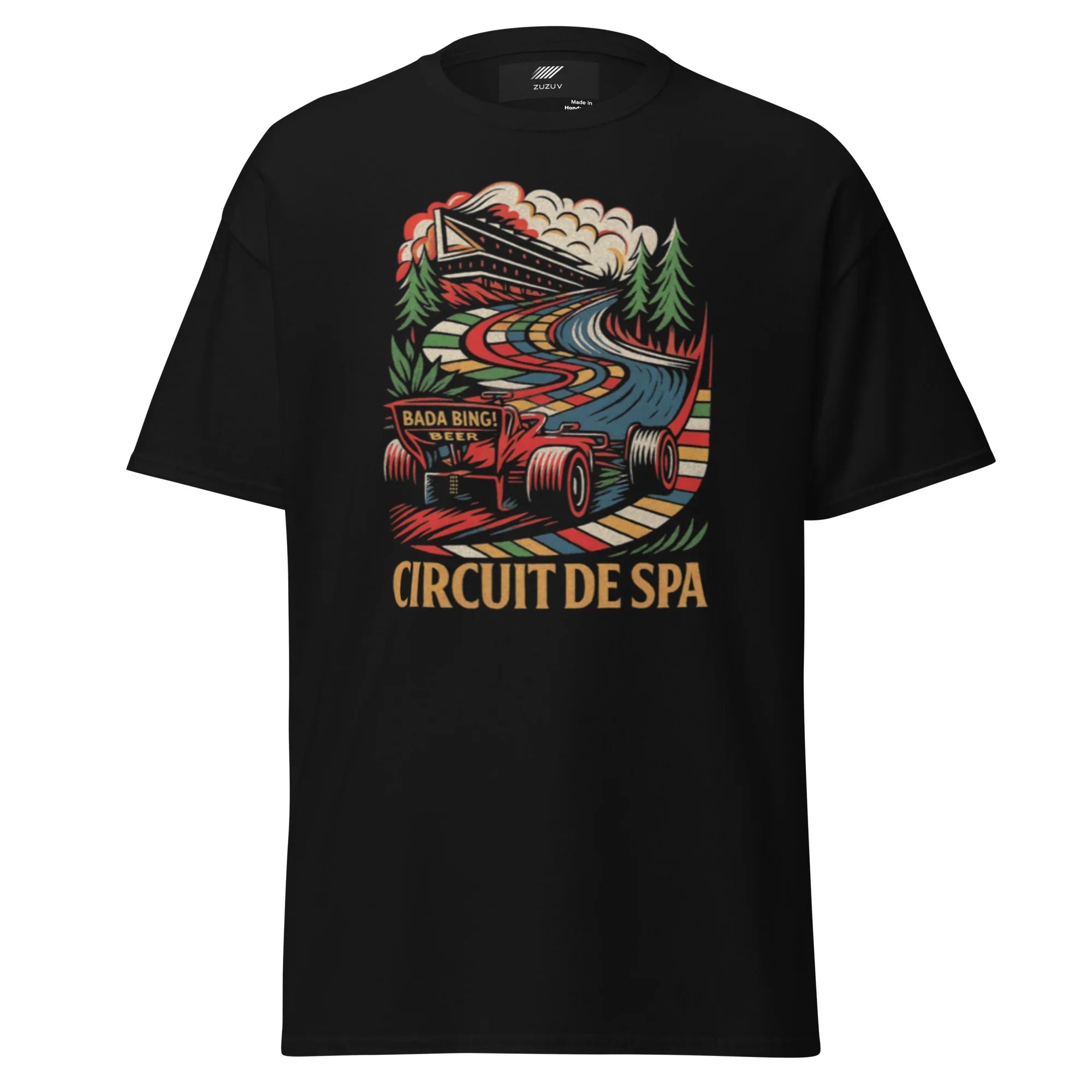
Prices for a custom printed t-shirt depend on the blank garment, the print method and the order size. ZUZUV's current tees start at 22.00 for the Charlie don't surf unisex classic tee, 23.00 for the Men's classic tee in the Rooster Totem series, 25.00 for the VELOCE 55 Euro Roadster and GOLDEN EYE tees, and 29.00 for the Phantom Grid racing tee. Compare these figures against the fabric details in each listing before deciding whether the price fits your budget.
How can you tell whether a T-shirt will last?
Look at three things: fabric weight, construction and fiber content. The ZUZUV classic tees use 5.0 to 5.3 oz per square yard (170 to 180 g/m2) fabric. Check for taped neck and shoulders and double seams at the sleeves and bottom hem. A 100% cotton tee is a different fiber blend from the heather colors, which are 50% cotton and 50% polyester, so compare the listed composition before deciding.
What's better, DTF or screen print?
Screen printing and direct-to-film printing suit different orders. Screen printing uses separate screens for each color, which tends to suit larger runs of a simple design. Direct-to-film prints the artwork onto a film transfer, which handles multi-color and detailed artwork well and works for smaller quantities. Ask your printer which method they use for the specific design, and check how the ink feels and holds up after a wash test on a sample before committing to a full order.
How do you care for a printed T-shirt?
Turn the shirt inside out before washing, use cold water and a mild detergent, and avoid bleach. Wash on a gentle cycle and air dry flat or on a hanger instead of using high heat, because heat is the main cause of cracking and fading on printed areas. Skip fabric softener, which can coat the print and dull it over time.
