
Last Updated: November 2, 2026
Quick Summary
Sustainable fashion for creative professionals means building a small rotation of durable, rewearable layers that survive studio days and client meetings. Look for a stated material breakdown, check the specifics behind any sustainability claim, and let cost per wear guide your choices.
- Recycled polyester blends hold their shape through repeat washing, making them suited to hoodies and activewear.
- Made-to-order pieces reduce overproduction but mean slower delivery, so plan ahead before you need them.
- Wash cold, air dry where you can, and follow the care label to extend garment life.
- A credible brand names its materials, production method, and fabric origin rather than using vague eco language.
- If a product listing will not state material percentages, that tells you something too.
Table of Contents
- Why Sustainable Fashion Works for Creative Professionals
- Sustainable Work Clothes That Handle Studio Days
- Sustainable Fashion Examples You Can Actually Wear
- What Sustainable Fabrics Should You Look For?
- How Do You Build a Sustainable Wardrobe on a Budget?
- How Do You Evaluate Sustainable Fashion Designers?
- The Bottom Line on Sustainable Fashion for Creative Professionals
- Frequently Asked Questions
Why Sustainable Fashion Works for Creative Professionals
Creative work has a wardrobe problem: clothes must survive paint, clay, ink, long studio hours, and client meetings in the same week. That is where sustainable fashion for creative professionals earns its place as a practical system, not a trend. Sustainable fashion is clothing designed, produced, and used to reduce environmental harm and support fair treatment of the people who make it (Learn what the EU does on sustainable fashion and RESet the Trend).
Sustainable Work Clothes That Handle Studio Days
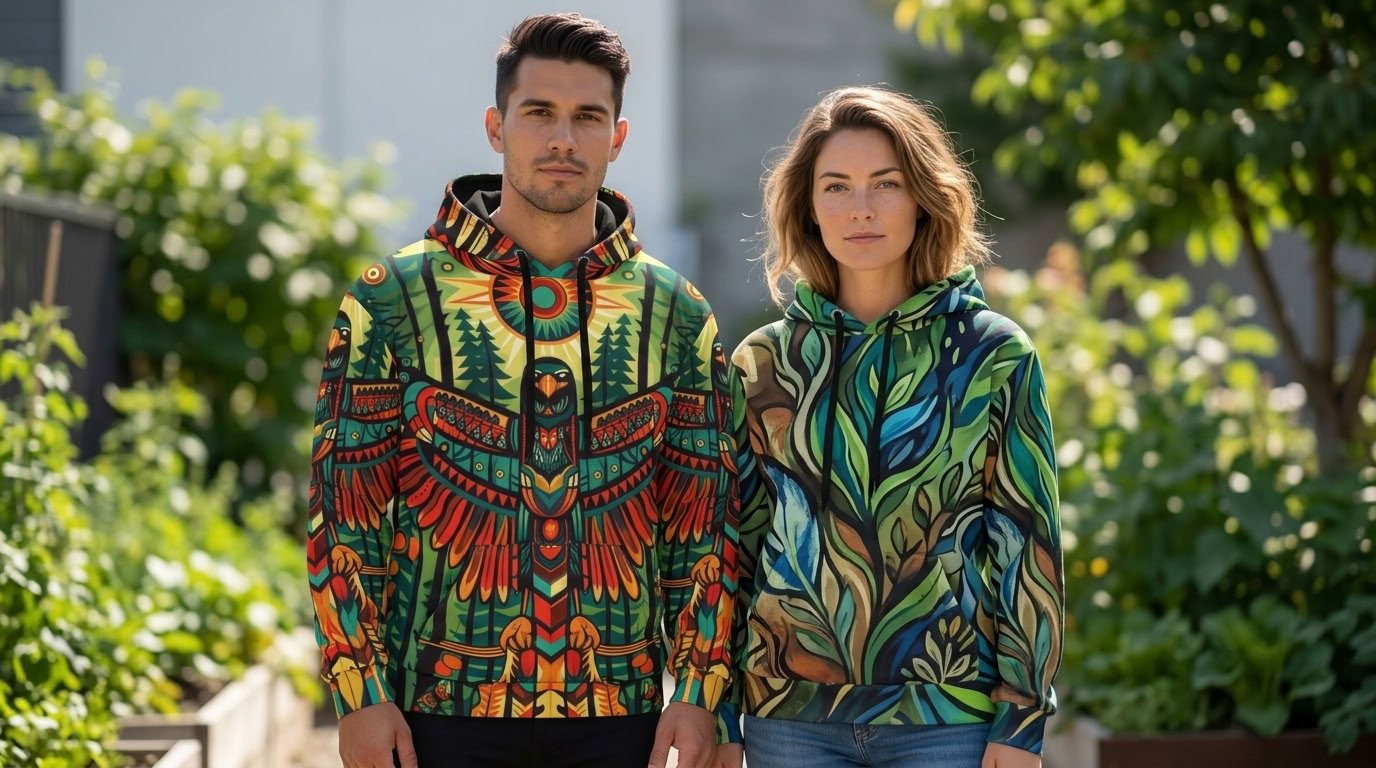
Studio days punish clothing, so the practical answer is a small rotation of durable layers you can rewear, the heart of slow fashion. Recycled polyester blends hold shape through repeat washing. For this rotation, shop the Wild Freedom recycled zip hoodie, a full-zip unisex piece with a cotton-feel exterior and brushed fleece inside; the Owl Totem eco raglan hoodie pairs organic cotton with recycled polyester. Watch out: these pieces are made to order and cannot be returned for buyer's remorse or sizing issues, so check the size chart and measure your chest and hips first.

Wild Freedom Unisex Recycled Zip Hoodie | ZUZUV
Sustainable Fashion Examples You Can Actually Wear
The best sustainable fashion examples are garments you would genuinely reach for on a Tuesday. Wearable art fits this brief: a bold print on a durable base turns one piece into a statement.
Creative professional in a recycled zip hoodie working in a sunlit studio with sketches and paint supplies
For real visual punch, browse the Tattoo recycled long-sleeve crop top, made from recycled polyester and elastane with UPF 50+ protection. For a bolder layer, the Lightning Bolt graphic hoodie puts vibrant abstract artwork on a heavyweight recycled base.


How do you check a sustainability claim?
Ask for the specifics, not the slogan. A credible brand names its materials, its production method, and where the fabric comes from; vague words like "eco" or "green" without detail are a warning sign. Third-party certifications and published material breakdowns are the signals worth trusting, and the FTC's Green Guides set out what marketers may and may not claim about environmental benefits.
What Sustainable Fabrics Should You Look For?
Fabric decides how long a garment lasts, so it decides how sustainable it really is. Organic cotton breathes well; recycled polyester keeps existing plastic in use and holds up to frequent washing.
Tattoo Recycled long-sleeve crop top →
Fabric |
Best for |
What to know |
|---|---|---|
Organic cotton |
Everyday layers, breathability |
Soft, comfortable, good for close-to-skin wear |
Recycled polyester |
Hoodies, activewear, swimwear |
Holds shape, dries fast, resists stretching |
Deadstock or upcycled fabric |
Limited-run statement pieces |
Diverts waste, availability varies |
Look for a stated material breakdown on the product page. If a listing will not tell you the percentages, that tells you something too.
How Do You Build a Sustainable Wardrobe on a Budget?
Cost per wear is the number that matters, not the price tag. Repair and care extend garment life more than any single purchase: wash cold, air dry where you can, and follow the care label.
How Do You Evaluate Sustainable Fashion Designers?
A designer's claims are only as good as the detail behind them. Ask where the fabric comes from, how production is scheduled, and whether pieces are made to order or in bulk. Made-to-order production is one signal worth asking about: making a garment only after an order reduces overproduction, one of fashion's largest sources of textile waste, it also means slower delivery, so plan ahead. The Ellen MacArthur Foundation's work on circular fashion explains why designing out waste at the production stage matters more than recycling afterward.
The Bottom Line on Sustainable Fashion for Creative Professionals
Sustainable fashion for creative professionals is not about buying more conscious-labeled clothing. It is about buying fewer pieces that survive your actual working life. Get the fabric right, check the claims, and let cost per wear guide you. That is the standard we hold at ZUZUV: original artistic designs on recycled bases, made to order.
Frequently Asked Questions
What does sustainable fashion mean for someone working in a creative field?
It means choosing workwear that survives real studio conditions: paint splatter, long commutes, and repeated washing. Look for durable materials, recycled fibers, and designs you will wear for years rather than one season. For creative professionals, sustainable fashion also means pieces that express your aesthetic so you do not replace them out of boredom. Practical markers include recycled polyester blends, organic cotton, and made-to-order production that avoids overstock.
What sustainable fabrics should I check for in work clothes?
Start with recycled polyester, organic cotton, and blends that include elastane for stretch. Recycled polyester keeps its shape through repeated washing and holds printed artwork well, which matters if your workwear carries a design. Check the fabric weight too: heavier knits around 300 g/m² resist pilling and hold up in daily rotation. Avoid vague 'eco' labels with no fiber breakdown, and look for certifications like GRS or OEKO-TEX where listed.
How do I know a small sustainable fashion designer is genuine?
Ask three questions: who makes the garment, what it is made from, and what happens if it arrives damaged. A genuine independent designer can answer all three without hedging. Look for named materials with percentages, a stated production method, and a clear returns policy for defects. Made-to-order production is a good sign because it means garments are made after you order rather than stockpiled. If a shop cannot tell you the fiber content, treat the sustainability claim as marketing.
Your wardrobe challenge is not finding more clothes. It is finding the few pieces that hold up and say something. ZUZUV offers meticulously crafted wearable art, custom-printed on demand, with original designs across hoodies, crop tops, and swimwear. Every piece is made to order to reduce overproduction, and our small-scale operation keeps artistic integrity at the center. Get started with ZUZUV and build a wardrobe that works as hard as you do.
